Parti di rotazione del CNC
You are welcomed to come to our factory to buy the latest selling, low price, and high-quality CNC Turning Parts, Notin looks forward to cooperating with you.
Overview of CNC turning Processing
CNC turning processing is a machining method that uses a computer program to control the movement of the lathe toolholder along the workpiece's contour, precisely cutting and processing the workpiece. Compared to traditional machine tools, CNC turning processing offers significant advantages, including high precision, high efficiency, low failure rate, and a high degree of automation. It is widely used in high-precision applications such as model manufacturing, aerospace, and satellite manufacturing.
What are the characteristics of CNC turning parts?
High-Precision Processing
CNC turnings offer extremely high machining accuracy, meeting the machining needs of a wide range of precision parts. Through precise CNC programming, CNC turnings can achieve micron-level machining accuracy, ensuring part quality and performance. This high-precision machining feature makes CNC turning parts widely used in high-precision applications such as aerospace, automotive manufacturing, and electronics.
High-Efficiency Production
CNC turning parts utilize automated processing methods, significantly improving production efficiency. Compared to traditional lathes, CNC turnings reduce manual intervention and achieve continuous, rapid processing. Furthermore, CNC turnings can perform multiple processing steps in a centralized manner, further shortening production cycles and improving production efficiency.
High Flexibility
CNC turning offer tremendous flexibility, adapting to machining parts of varying shapes, sizes, and materials. By changing tools and adjusting machining parameters, CNC turnings can easily handle a wide range of complex parts. This flexibility gives CNC turning parts a significant advantage in responding to market changes and customer demands.
High Degree of Automation
CNC turnings utilize computer control systems, enabling highly automated machining processes. Operators simply program the machining program, and the CNC turning automatically completes the machining task. This high degree of automation not only reduces operational complexity but also minimizes machining errors caused by human error.
In short, CNC turning parts occupy a vital position in modern manufacturing due to their high precision, high efficiency, flexibility, and automation. With the continuous advancement of technology and evolving market demands, CNC turning parts will continue to leverage their advantages and contribute to the development of the manufacturing industry.
What types of parts are suitable for machining on CNC turnings?
CNC turning are highly efficient and energy-efficient CNC machine tools widely used in the machinery manufacturing industry. They are suitable for machining the following types of parts:
1. Shafts: CNC turning are capable of machining small-diameter, high-precision shafts and various custom-shaped surfaces.
2. Gears: CNC turning can machine a variety of gears and their associated transmission components. The lathe's various toolholder systems and cutting tools enable the machining of a wide variety of tooth shapes.
3. Threads: CNC turning can efficiently machine a variety of threads, including metric, imperial, special, and left-hand threads.
4. Custom-shaped surfaces: CNC turning can machine a variety of irregularly shaped surfaces, such as various tooth shapes, curved surfaces, chamfers, grooves, and convex and concave surfaces.
CNC turning Process
1. CNC Programming: Import the CAD file into CAM software and create the CNC program.
2. Workpiece Clamping: Clamp the workpiece to be machined onto the CNC turning.
3. Machine Tool Adjustment: Adjust the position and speed of each axis of the CNC turning according to the machining program requirements.
4. Automatic Machining: Start the CNC machining program, and the CNC turning automatically completes the workpiece according to the program requirements.
5. Finishing and Measurement: After machining is completed, the workpiece surface is trimmed, deburred, and the finished dimensions are measured.
What materials can CNC turning process?
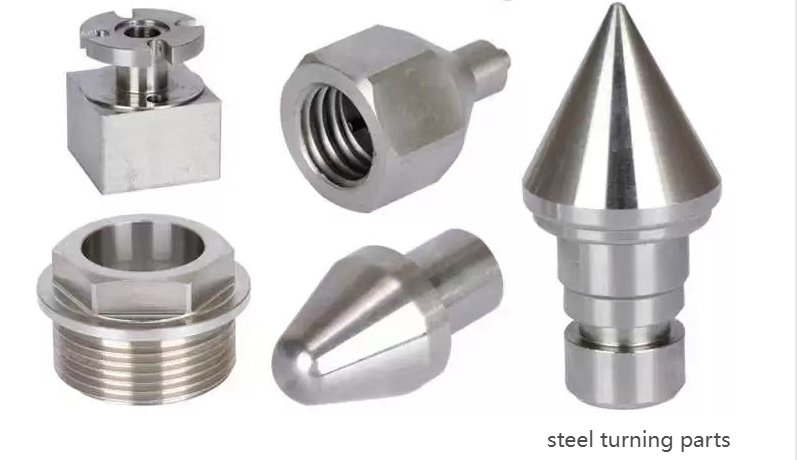
1. Steel Turning: CNC turning is suitable for machining various steels, such as carbon steel, alloy steel, and stainless steel. Carbon steel machining is the most common, typically using techniques such as high-speed cutting and chemical cutting.
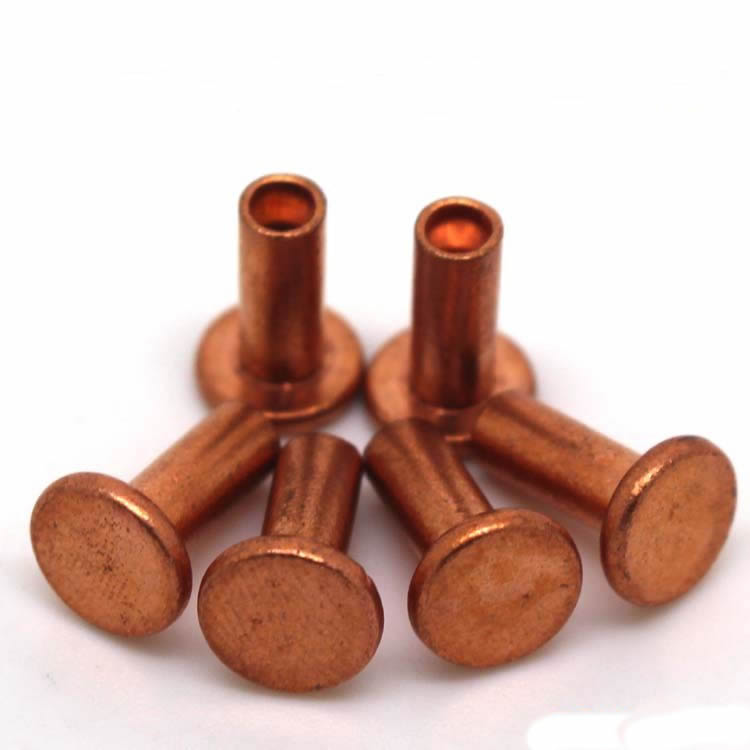
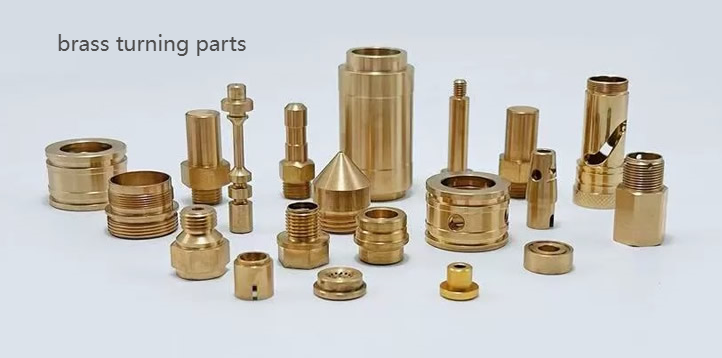
2. Copper Turning: brass machining typically uses cutting and milling techniques. Due to its excellent thermal and electrical conductivity, brass is suitable for manufacturing high-precision electronic components.
3. Aluminum Turning: Aluminum alloys are lightweight, corrosion-resistant, and high-strength, making them widely used in industries such as aviation and automotive. CNC turning is suitable for machining various aluminum alloys.
4. Stainless steel turning parts: Stainless steel has the advantages of high specific strength, high specific stiffness and high temperature strength, and is widely used in aerospace, shipbuilding and other fields. CNC turning is suitable for processing various Stainless steel materials.
Prodotti

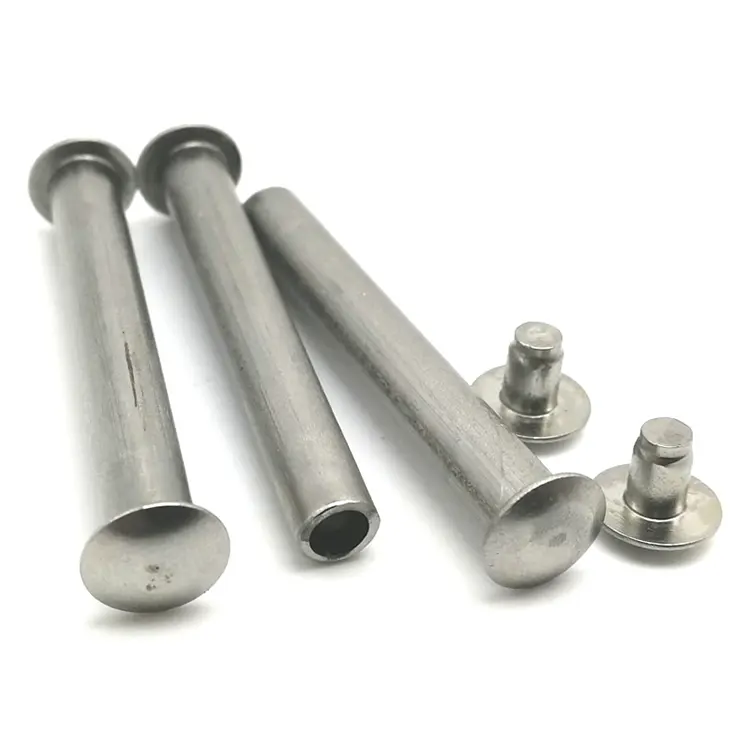
- View as
Componenti torniti in acciaio inossidabile
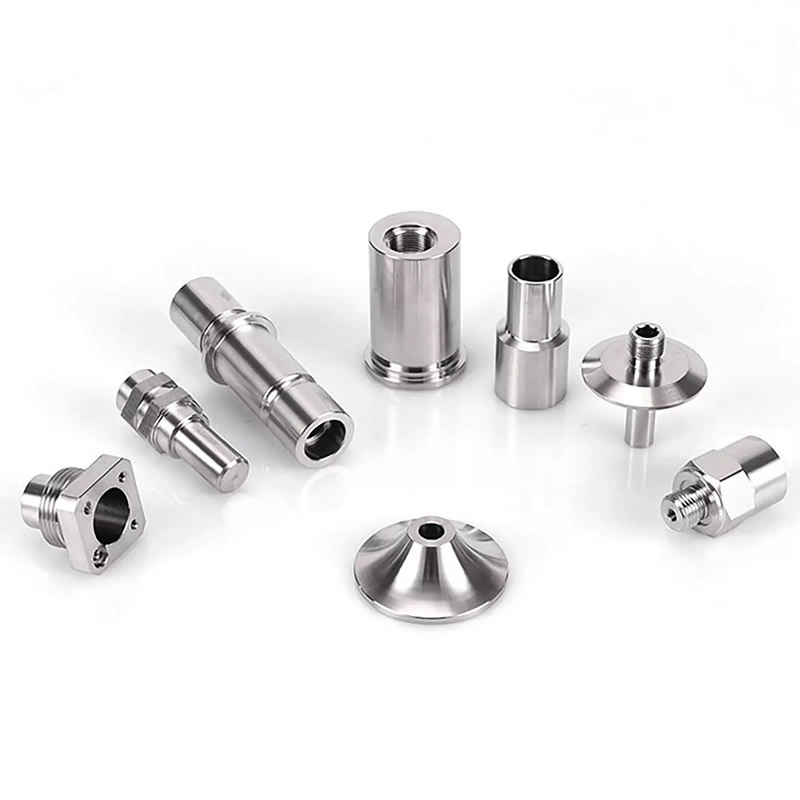
La tornitura dell'acciaio inossidabile non fallisce perché l'utensile non può tagliarlo. Fallisce perché lo strumento sfrega invece delle cesoie e lo sfregamento crea una pelle indurita (20-100μm di profondità, fino a 580 HV) che fa sì che la passata successiva tagli una superficie più dura. Il taglio di finitura quindi scorre su quella pelle invece di rimuoverla, la dimensione si sposta e la superficie imbratta il ferro libero che la passivazione non può rimuovere completamente. Nuote Metals produce componenti torniti in acciaio inossidabile in Cina con tagli di finitura sufficientemente profondi da penetrare sotto lo strato indurito, cambi di utensile programmati prima che lo strato si accumuli e passivazione verificata secondo ASTM A967. 304, 316L, 17-4PH. PPAP documentato.
Per saperne di piùInvia richiesta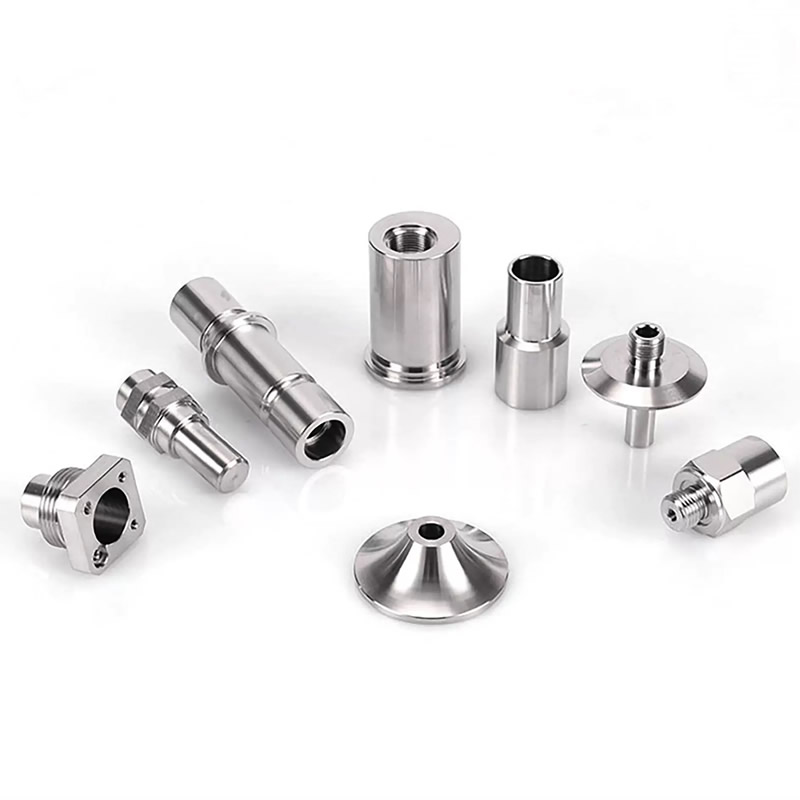
Componenti torniti CNC
Un componente tornito CNC non viene giudicato dal suo stesso disegno, ma dal fatto che si adatti alla parte accanto. Il foro deve corrispondere all'albero, la faccia deve sigillare contro l'alloggiamento, la filettatura deve impegnarsi nella porta. Nuote Metals produce componenti torniti CNC in Cina con dimensioni di interfaccia e pile di tolleranze gestite per l'assemblaggio: i calibri funzionali simulano la parte accoppiata prima della spedizione del lotto. ±0,005 mm su interfacce critiche.
Per saperne di piùInvia richiesta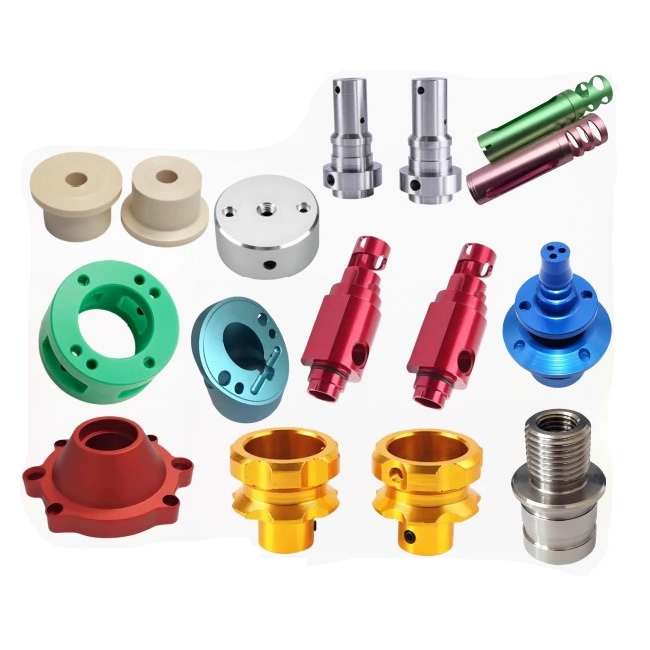
Parti tornite in alluminio
Un pezzo tornito in alluminio viene giudicato due volte: una volta al tornio e una volta dopo l'anodizzazione. Una superficie che misura Ra 0,8μm sul tornio può mostrare anelli rotanti visibili dopo l'anodizzazione, perché lo strato di ossido rivela ogni segno dell'utensile. Nuote Metals produce parti tornite in alluminio in Cina con struttura superficiale controllata per l'anodizzazione: inserti lucidati non rivestiti, segni di avanzamento controllati e Ra verificato prima del rivestimento. 6061, 7075, 2024.
Per saperne di piùInvia richiesta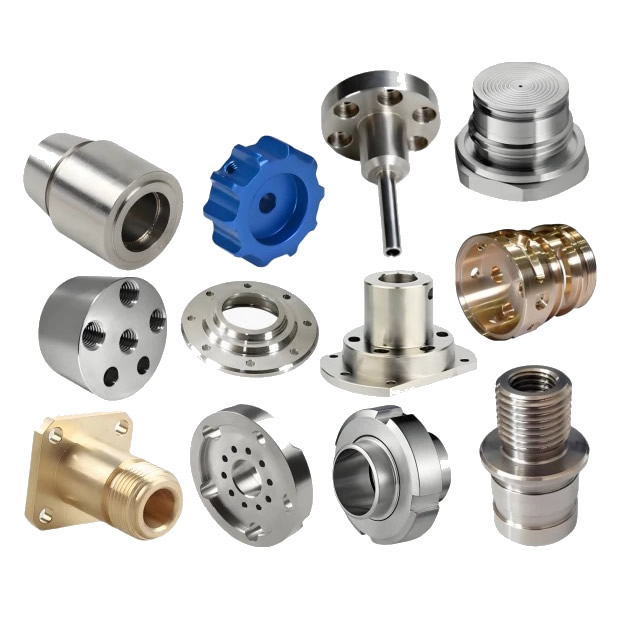
Pezzi torniti di precisione CNC
Un pezzo tornito di precisione non viene realizzato ispezionandolo più attentamente, bensì correggendo il processo mentre il pezzo è ancora nella macchina. La deriva termica e l'usura dell'utensile spostano le dimensioni durante il batch; l'ispezione offline rileva la deriva dopo la realizzazione delle parti. Nuote Metals produce pezzi torniti di precisione CNC in Cina con misurazione in-process e compensazione a circuito chiuso, misurando sul tornio e regolando l'offset prima della parte successiva. ±0,002 mm su diametri critici.
Per saperne di piùInvia richiesta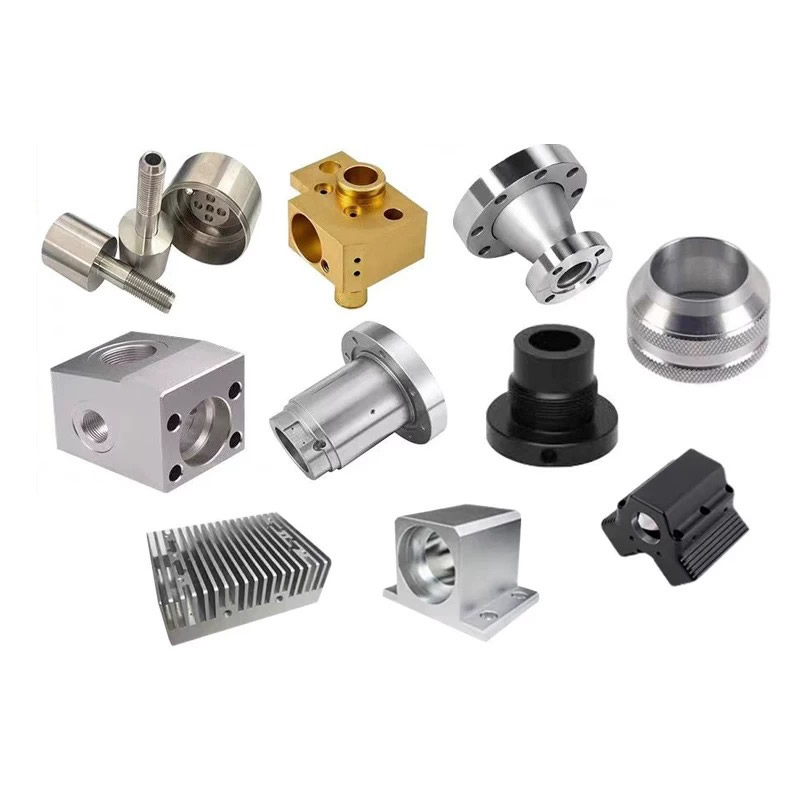
Particolari torniti e fresati
Non tutti i pezzi torniti e fresati necessitano di un centro di fresatura-tornitura a 5 assi. Ciò di cui ha bisogno è un piano di installazione che corrisponda alle relazioni tra le funzionalità: le funzionalità che devono allinearsi vanno in un'unica configurazione; funzionalità che non possono spostarsi tra le macchine. Nuote Metals produce pezzi torniti e fresati in Cina con una pianificazione dell'impostazione guidata dalle relazioni tra le caratteristiche del disegno, non dall'elenco delle capacità della macchina. ±0,005 mm sui rapporti critici.
Per saperne di piùInvia richiesta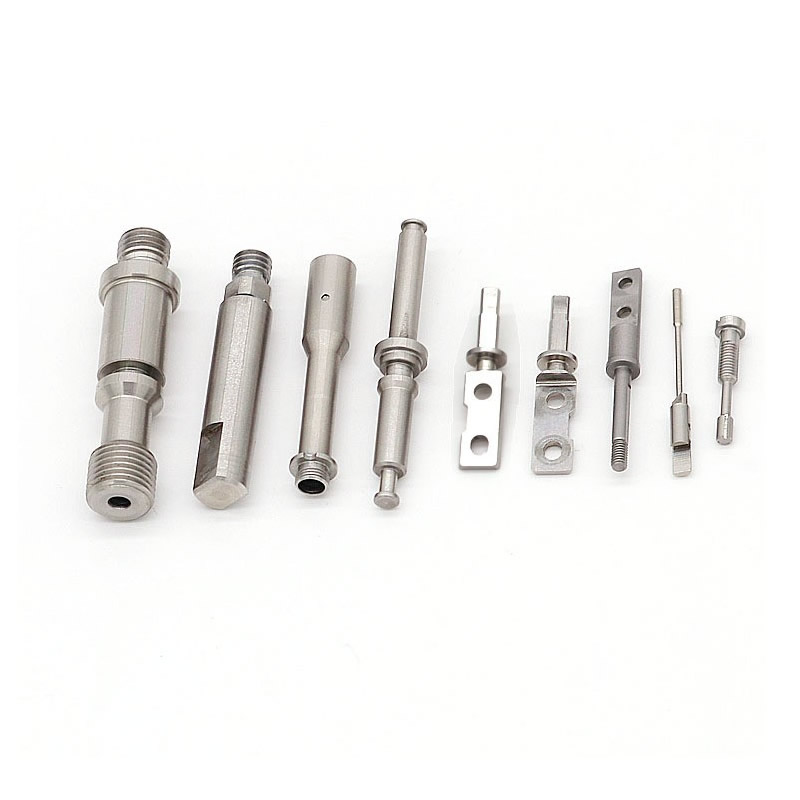
Componenti lavorati a CNC
Un componente lavorato a CNC viene raramente realizzato su un'unica macchina. Viene tornito, poi fresato, poi rettificato e ogni volta che si muove, il punto di riferimento può spostarsi. Nuote Metals produce componenti lavorati a CNC in Cina con un dato stabilito durante la prima operazione e referenziato in ogni operazione successiva: tornitura, fresatura, rettifica e ispezione. ±0,005 mm su caratteristiche critiche.
Per saperne di piùInvia richiestaMain points and precautions for processing different materials
Main points for steel turning:
(1) When performing high-speed cutting, the cutting depth should not be too large to prevent the cutting edge from overheating and becoming brittle and damaged;
(2) Pay attention to cooling and spray water or oil on the cutting area in time;
(3) Pay attention to selecting the appropriate tool type and cutting parameters.
Main points for brass turning:
(1) The processing speed should not be too fast to prevent thermal deformation of the material;
(2) Select appropriate cutting fluid and tool;
(3) Pay attention to tool wear and damage to the cutting edge.
Main points for aluminum turning:
(1) Use cutting fluid to reduce chips;
(2) Select appropriate cutting parameters;
(3) Pay attention to avoiding heating in the cutting area and preventing the cutting edge from deteriorating.
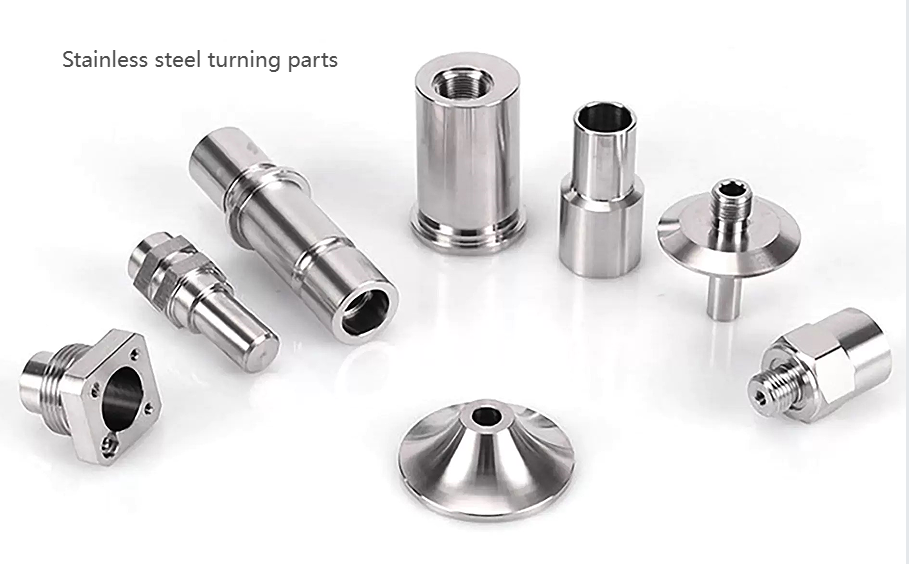
Key points of Stainless steel turning:
(1) Stainless steel has a high plastic deformation capacity. During processing, it is important to control the processing volume to avoid excessive deformation;
(2) Select appropriate cutting parameters and cutting fluids;
(3) Pay attention to tool wear and damage.
What are the advantages of CNC turning processing?
1. High precision: CNC turnings can achieve high-precision processing, and their accuracy can reach below 0.01mm.
2. High efficiency: CNC turnings have fast processing speeds and can continuously process multiple workpieces, which improves production efficiency.
3. High degree of automation: CNC turnings are controlled by computer programs, with a high degree of automation, which reduces the difficulty of manual operation.
4. Stable workpiece quality: CNC turnings have stable processing and high precision, which effectively guarantees the quality of workpieces.
What fields are CNC turning parts mainly used in?
CNC turnings are widely used in high-precision fields such as model manufacturing, aerospace, and satellite manufacturing. At the same time, they are gradually entering large-scale production fields such as automobiles, machinery, and chemicals. CNC turning processing has become an essential tool for modern high-precision, high-efficiency manufacturing.
Conclusion
This concludes our introduction to CNC turning processing. With the continuous advancement of technology, CNC turning processing will be applied in more fields, ushering in even broader development prospects.



X
Utilizziamo i cookie per offrirti una migliore esperienza di navigazione, analizzare il traffico del sito e personalizzare i contenuti. Utilizzando questo sito, accetti il nostro utilizzo dei cookie.
politica sulla riservatezza